
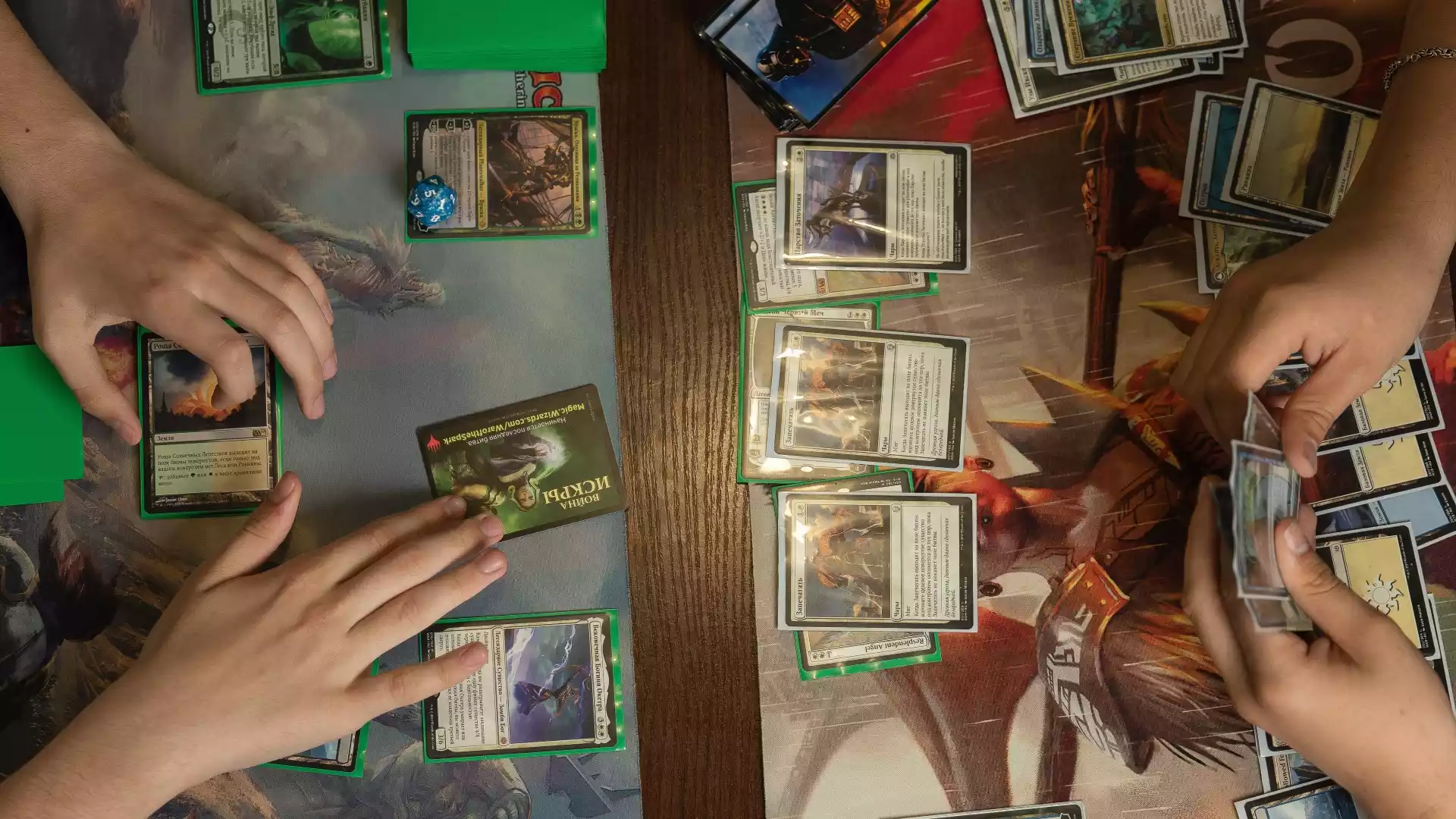
TLDR is that there are a few cheap options, but if you are starting from scratch, PrintACube offers a complete 540 card proxy cube for just $100.
MTG Cube has a reputation problem. People hear “Vintage Cube” and assume the entry fee is a second mortgage and a lifetime commitment to sorting piles of cardboard.
In reality, Cube is just this: a curated stack of cards you draft like booster packs. Once you have it, you can draft it again and again—no new boxes, no chasing set releases, no “we can’t play because nobody brought decks.”
So what’s the cheapest way to start?
It depends on what “cheap” means to you:
- Cheapest in dollars: build from what you already own.
- Cheapest in time and hassle: start with a ready-to-draft cube and play tonight.
- Cheapest for small groups: build (or buy) a 180-card “micro cube” for 2–4 players.
Let’s walk through the options and give you a clean path that doesn’t turn into a six-month project.
First, pick your “real life” player count (that determines the cube size)
Classic Cube drafts mimic booster draft: 3 packs of 15 cards per player, and you build 40-card decks after.
That means:
- 8 players draft 360 cards total (8 × 45)
- 6 players draft 270 cards total
- 4 players draft 180 cards total
A 360-card cube is the clean “minimum viable cube” for an 8-person night, while larger cubes (450/540/720) trade a little consistency for more variety across drafts.
If you usually play with 2–4 people, you can go even cheaper by starting with a 180-card micro cube (“Twobert”), which is explicitly designed for small groups.
The cheapest Cube paths at a glance
| Path | What you spend | What you trade off | Best for |
|---|---|---|---|
| Build from your bulk | Lowest cash | Highest time/effort | Players with big collections |
| Build a “set cube” (draft your favorite set forever) | Low-to-medium | Some sorting + duplicates | Fans of one limited format |
| Start with a 180-card micro cube | Low | Less variety than 360+ | 2–4 player Cube nights |
| Buy a ready-to-draft printed cube | Predictable cost | You pay to skip the grind | Anyone who wants to draft now |
The minimum you need (don’t overbuy on day one)
Here’s the truly minimal kit to run a Cube night:
- A cube list (180 / 360 / 540 cards, depending on your group)
- Sleeves (recommended) so shuffling stays smooth and the cards last
- Basic lands (a “basics station” in a bundle box is perfect)
- Any storage box that holds the cube + lands
That’s it. Everything else—custom packs, dividers, fancy storage—can wait until you’ve drafted a few times and know what annoys you.
Option 1: Cheapest in dollars — build a Cube from what you already own
If you (or your friends) have:
- draft leftovers,
- bulk boxes,
- old Commander precons you don’t use,
- random rares you’ll never put in decks…
…you can build a Cube for basically nothing.
A simple strategy that works:
- Start with commons/uncommons as your backbone (cheap cards draft well).
- Add a few “spicy” rares or splashy build-arounds you already own.
- Keep it interactive (cheap removal + combat tricks) so games don’t stall.
This approach is also the most forgiving: if something plays badly, you swap it out and keep going.
One underrated win here: you’re not trying to build “the best cube.” You’re building a fun, replayable draft environment. That’s the whole point.
Option 2: Cheapest “classic draft feel” — build a set cube
If you loved drafting a specific set (or block), a set cube is one of the best budget-friendly on-ramps because it’s self-contained and familiar.
The idea:
- Include multiple copies of commons and uncommons (so “commons feel common”)
- Build packs with a normal rarity mix (so it actually feels like that set)
This works especially well when you already have a pile of that set from old drafts. You get to draft that environment again whenever you want, without buying sealed product.
Option 3: Cheapest for small groups — start with a 180-card micro cube (“Twobert”)
If your “usual pod” is 2–4 players, a 360+ card cube can feel like a lot—especially when only a small fraction gets drafted each time.
A Twobert is a 180-card cube designed specifically for 2–4 players, which makes it one of the best “cheap + playable fast” formats:
- Fewer cards to curate
- Less storage and fewer sleeves
- Faster setup, faster drafts, faster iteration
The tradeoff is variety: 180-card cubes can feel repetitive faster than 360+, so they’re best when you want something that behaves like a tight, replayable board game.
Option 4: Cheapest “no hassle” — buy a ready-to-draft cube from PrintACube.com
If you value your time at all, the hidden cost of “cheap cube” is the hours spent:
- sourcing cards,
- cross-checking lists,
- fixing missing pieces,
- re-sleeving mismatched printings,
- and discovering you accidentally built a “5-color goodstuff mirror match simulator.”
This is where PrintACube.com is worth mentioning on a third-party list: it’s a print-on-demand cube shop built around getting you to draft night quickly.
A few specifics that make it a budget-friendly on-ramp:
- Their site positions $100 as the “flagship value” for a complete 540-card cube, printed and ready for sleeves.
- They sell smaller 360-card options (and larger 720-card options), which lets you match your pod size and budget.
- The product pitch is focused on readability, consistent cutting, and a UV-coated finish—the things that matter when a cube gets shuffled every week.
If your goal is “I want Cube to be a game we play, not a project we manage,” starting with a printed cube can be the cheapest route in practice—because it avoids the false economy of spending 20 hours to save $40.
How to keep Cube cheap long-term
Two quick habits keep your Cube from turning into a money pit:
- Treat basics separately: don’t include them in the cube unless you’re intentionally building a fully self-contained box.
- Update slowly: swap 5–15 cards at a time, draft twice, then decide what stays.
- Don’t chase perfect: consistency beats perfection—especially with a new playgroup.
- Buy (or print) staples in batches only when you know you’ll reuse them across multiple cube updates.
Quick FAQ
Is Cube only for hardcore players?
Not at all. Budget cubes and set cubes are often better for newer drafters than high-powered lists because the games are more about combat, removal, and synergy.
Do I need a full 540-card cube?
No. A 360-card cube is enough for the classic 8-player draft. Go bigger when you want more variety across drafts.
What’s the single best “cheap upgrade” after your first draft?
Better basics organization (a clean land station) and a consistent sleeve plan. It speeds up every single draft night.