
TLDR
The best MTG proxy cube staples are not just the strongest cards in Magic. They are the cards that make your draft night work.
Print these first:
- Dual lands and fixing so players can cast their spells.
- Archetype signposts so drafters understand what lanes are open.
- Removal and interaction so games do not turn into goldfishing.
- Power outliers so the cube has exciting first-pick moments.
- Tokens and markers so gameplay stays clean once the cards hit the table.
Start With The Cards That Make The Cube Work
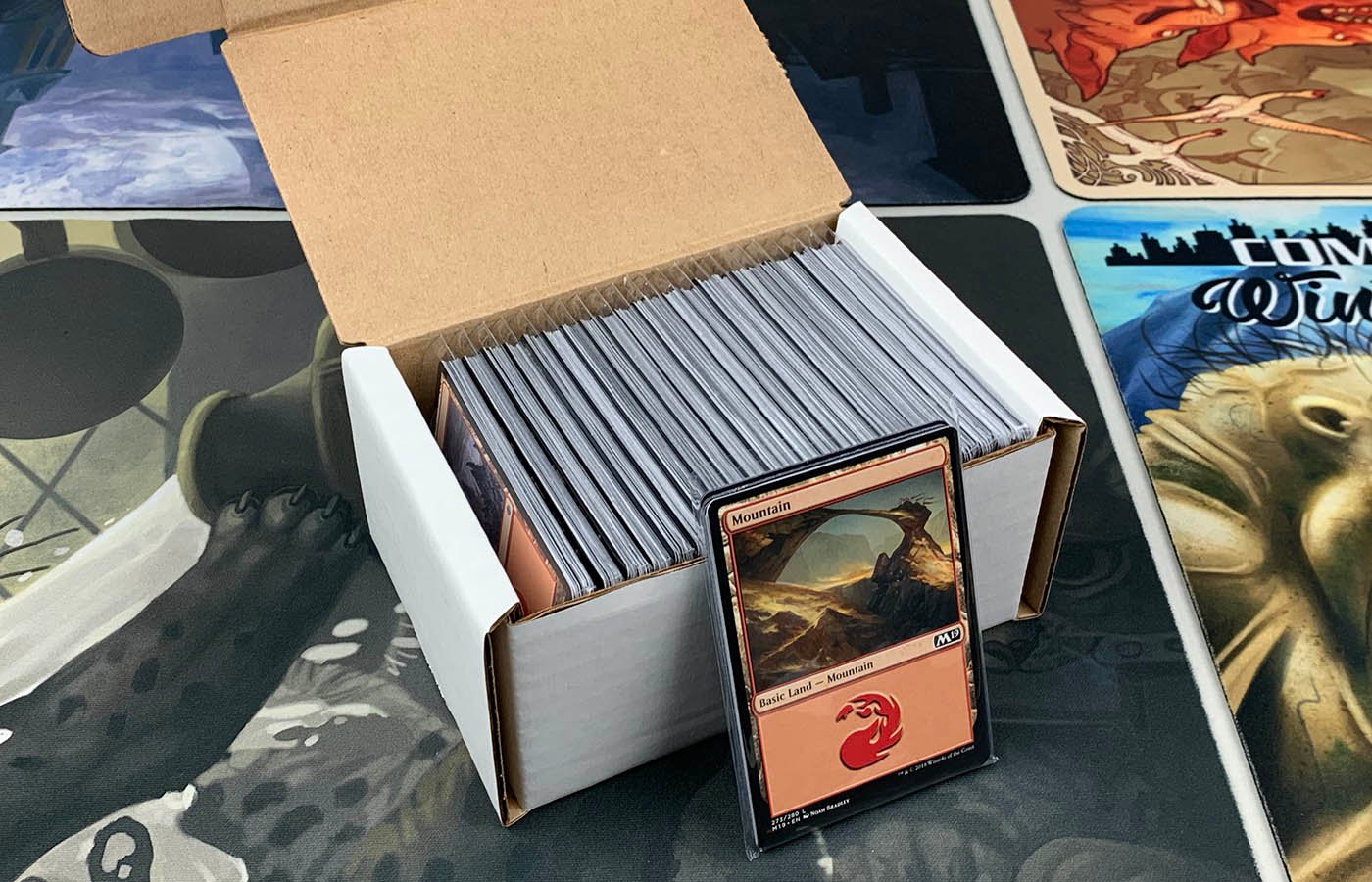
A cube is not a binder checklist. It is a game box.
That matters when you are choosing MTG proxy cube staples, because the first question should not be “what are the best 360 cards?” The better question is: “What cards make draft night better the fastest?”
Those are different questions. A pile of powerful cards can still draft badly if the fixing is thin, the archetypes are vague, and nobody has enough removal to stop the person who opened the nonsense card. A cube does not need to be perfectly balanced on the first run. But it does need to produce playable decks.
That is where proxies are useful. You can print the infrastructure first, test the environment, then upgrade the spicy stuff later. Nerdventure already carries a wide range of MTG proxy cards that work well for cube building, deck testing, casual play, and collection projects. But for cube, order matters.
Here is the practical priority list.
| Priority | Cube Proxy Category | Why It Matters |
|---|---|---|
| 1 | Dual Lands And Fixing | Draft decks actually function |
| 2 | Archetype Signposts | Players know what lanes are open |
| 3 | Removal And Interaction | Games do not become solitaire |
| 4 | Power Outliers | Adds excitement without breaking balance |
| 5 | Tokens And Markers | Makes gameplay cleaner |
1. Print Dual Lands And Fixing First
Mana fixing is the least glamorous cube upgrade and usually the correct first print.
That is rude, but true.
A cube full of exciting cards feels bad if players cannot cast them. This is especially true in powered cubes, vintage cubes, synergy cubes, Commander cubes, and multicolor-heavy environments. If a player drafts a sweet blue-red spells deck but spends the night playing tapped lands and passing with the wrong colors, the problem is not the archetype. The problem is the mana.
Start with the fixing that supports the decks you actually want people to draft.
For a traditional cube, that usually means:
- Shock lands for flexible two-color fixing
- Fetch lands if your environment supports them well
- Original dual-style proxies for higher-powered cubes
- Triomes for slower three-color decks
- Pain lands, fast lands, or pathways for lower-curve environments
- Rainbow lands if you support five-color decks or splashy piles
- Utility lands only after the main color fixing is stable
The important part is not just quantity. It is placement.
If your cube wants players to draft Azorius control, Rakdos sacrifice, Golgari graveyard, and Izzet spells, the fixing should help those decks come together. If you support five-color goodstuff, then City of Brass, Mana Confluence, Reflecting Pool, and other rainbow lands become more important. If you do not want five-color soup to take over every draft, be more careful with broad fixing.
Nerdventure already has a related guide on MTG land proxies for Commander mana bases. Commander and cube are different formats, but the core lesson carries over: lands are infrastructure. They make the fun cards actually function.
For cube, I would print fixing before almost anything else.
2. Print Archetype Signposts So Drafters Know What Is Open
Once the mana works, print the cards that tell players what your cube is about.
Archetype signposts are the cards that say, “This lane exists.” They do not need to be gold cards, but gold cards often do the job clearly. Think of cards that make a drafter understand a direction quickly.
Examples by archetype:
| Archetype | Useful Signpost Style |
|---|---|
| Azorius Control | Sweepers, card draw, planeswalkers, defensive finishers |
| Rakdos Sacrifice | Mayhem Devil-style payoffs, recursive creatures, sacrifice outlets |
| Izzet Spells | Cheap cantrips, prowess threats, spell-copy payoffs |
| Golgari Graveyard | Self-mill, reanimation, value creatures |
| Selesnya Tokens | Token makers, anthem effects, go-wide payoffs |
| Dimir Reanimator | Discard outlets, reanimation spells, large targets |
| Boros Aggro | Efficient one-drops, equipment, combat tricks, burn |
| Simic Ramp | Mana creatures, land ramp, large finishers |
| Orzhov Aristocrats | Drain effects, sacrifice fodder, recursion |
| Gruul Monsters | Mana acceleration, efficient threats, fight spells |
The mistake is printing only the payoff.
A reanimator deck does not work because one card says “return target creature.” It needs discard outlets, graveyard enablers, reanimation spells, and targets worth bringing back. A sacrifice deck does not work because one blood artist effect exists. It needs fodder, outlets, payoffs, and interaction that does not pull the deck apart.
Good cube signposts do two things:
First, they help drafters read the table. A player sees a late Goblin Bombardment, Faithless Looting, or Blood Artist-style card and thinks, “Okay, maybe this lane is open.”
Second, they help the cube owner test the environment. If nobody ever drafts your blue-red spells deck, the issue may not be that players dislike spells. It may be that your signposts are too quiet, your payoffs are too narrow, or your support cards are scattered.
For a first proxy batch, print a few clear signposts for every archetype you want to support. Do not overbuild one lane and leave another color pair guessing.
3. Print Removal And Interaction Before More Finishers
Every cube owner loves adding threats.
That is understandable. Threats are fun. Big dragons, busted planeswalkers, haymaker enchantments, giant artifacts, graveyard monsters. You look at them and immediately picture the story.
But draft games need answers.
Removal and interaction stop the cube from becoming solitaire. They also let different decks play real Magic against each other. Aggro needs ways to clear blockers. Control needs answers to early threats. Midrange needs flexible interaction. Combo needs pressure and disruption around it. Even battlecruiser cubes need ways to prevent one permanent from taking over every game.
Start with broad, efficient interaction:
- White: Swords to Plowshares, Path to Exile, Council’s Judgment, Portable Hole, sweepers
- Blue: Counterspell, Mana Leak, Force of Will-style effects, bounce spells
- Black: Fatal Push, Thoughtseize, Inquisition of Kozilek, Doom Blade-style removal, reanimation disruption
- Red: Lightning Bolt, Chain Lightning, Abrade, Unholy Heat, sweepers
- Green: Beast Within, fight spells, artifact and enchantment removal
- Colorless: Oblivion Stone, Engineered Explosives, Ratchet Bomb-style effects
- Multicolor: Vindicate, Abrupt Decay, Assassin’s Trophy, Kolaghan’s Command, Lightning Helix
The exact power level depends on your cube. A high-powered vintage-style cube can handle stronger answers. A lower-power environment may want cleaner but less brutal interaction.
The important thing is density.
If you print only the exciting threats first, your draft night can turn into “who sticks the dumbest permanent?” That might be funny once. It is not a great format.
A useful test: after building sample draft decks, ask whether each deck has a reasonable way to answer a fast creature, a planeswalker, an artifact or enchantment, and a large creature. Not every color needs to answer everything equally, but the table should not feel helpless.
Nerdventure’s broader MTG proxy staples article is Commander-focused, but the reusable-card logic applies here too. Interaction, mana, and flexible role players age better than one-deck novelty cards.
4. Add Power Outliers Carefully
Power outliers are good for cube.
They create stories. They make draft picks exciting. They give players those “oh no, you passed this?” moments. A cube with no peaks can feel flat, even if the games are technically balanced.
But power outliers need a job.
A good power outlier can be:
- A first-pick build-around
- A reward for being in a specific archetype
- A splashable bomb that asks for a mana commitment
- A fast mana piece in a powered environment
- A premium answer that keeps threats honest
- A risky card that rewards careful drafting
Examples include cards like Moxen, Black Lotus, Sol Ring, Oko, Thief of Crowns, Jace, the Mind Sculptor, Umezawa’s Jitte, Tinker, Natural Order, Sneak Attack, Recurring Nightmare, Balance, Skullclamp, or Strip Mine.
Not all of those belong in every cube. Some are format-defining. Some are fun if your table likes chaos. Some are miserable if they show up too often without enough answers. The point is not “print all the busted cards.” The point is to choose which kind of excitement your cube wants.
There are a few ways to manage power outliers:
You can cluster them in a powered cube, where everyone expects high-variance nonsense.
You can limit them in a fair cube, where one or two pushed cards exist but do not define the whole night.
You can tie them to archetypes, so the best cards still require drafting around them.
You can cut cards after testing, which is often the correct answer. Do not let one famous card ruin six good games because it is too iconic to question.
Proxies help here because you can test before committing. Print the exciting card. Run two or three drafts. If the card creates good stories, keep it. If it creates groans every time, move it to the “maybe later” pile.
5. Do Not Forget Tokens And Markers
Tokens are not the flashy part of cube prep, but they make draft night much smoother.
If your cube has cards that make Treasures, Clues, Food, Soldiers, Goblins, Zombies, Saprolings, Spirits, Constructs, Angels, Beasts, or Thopters, you should have the matching tokens ready. Same goes for counters and markers.
This matters more than people think.
A cube table already has enough going on: drafted decks, sideboards, sleeves, basic lands, dice, drinks, snacks, and at least one person asking where the black tokens went. Clean tokens reduce confusion.
Print or gather:
- Common creature tokens
- Treasure, Clue, Food, Blood, Map, and other artifact tokens
- Copy tokens
- Initiative, monarch, dungeon, or ring markers if your cube uses them
- +1/+1 and -1/-1 counter support
- Energy, poison, experience, or shield counters if needed
- Emblems for planeswalkers that actually make them
You do not need a museum-quality token box. You just need gameplay clarity.
If your cube includes cards that make specific tokens repeatedly, print those before draft night. If a token appears once in the whole cube, a generic marker is probably fine. Put the common tokens in a small deck box with basic lands, and your future self will feel like you were unusually responsible.
A Practical First Print List By Category
Here is a simple way to think about your first MTG proxy cube staples batch.
First 40 Cards To Print
| Count | Category | What To Prioritize |
|---|---|---|
| 10–20 | Lands and fixing | Duals, fetches, shocks, rainbow lands, triomes |
| 8–12 | Signposts | Clear cards for supported archetypes |
| 8–12 | Interaction | Removal, counters, discard, sweepers |
| 4–8 | Power outliers | Exciting cards that fit your cube’s power level |
| As needed | Tokens | Only the tokens your cube actually makes |
This is not as exciting as printing every famous card in Magic history. It is better.
It gives you a playable environment faster. Players can draft real decks. They can see archetype lanes. They can interact. And the power cards have enough support around them to feel like part of a cube, not random fireworks thrown into a shoebox.
Build Around Draft Night, Not The Spreadsheet
Spreadsheets are useful. Cube Cobra lists are useful. Rankings are useful.
But draft night tells the truth.
After your first run, ask simple questions:
- Did players cast their spells on time?
- Did every color pair have a clear plan?
- Did aggro have enough support?
- Did control have enough answers?
- Did midrange just become the default best deck?
- Did any card create bad games repeatedly?
- Were there enough tokens and markers?
- Did players understand what they were supposed to draft?
Those answers should shape your second print batch.
Maybe you need more fixing. Maybe your artifact deck needs better payoffs. Maybe reanimator has too many targets and not enough enablers. Maybe your red section has burn but no real identity. Maybe your green decks ramp into nothing. Normal cube stuff. Everybody’s first list has a few crimes in it.
That is fine.
The goal is not to solve cube forever. The goal is to make the next draft better.
FAQs
What Are MTG Proxy Cube Staples?
MTG proxy cube staples are proxy cards that improve a cube draft environment. The most important staples are usually lands, fixing, signpost cards, removal, interaction, power outliers, and tokens.
Should I Print The Most Powerful Cards First?
Not usually. Print the cards that make decks function first. Mana fixing, archetype support, and interaction usually improve draft night more than a stack of famous bombs.
How Many Lands Should I Print For A Cube?
It depends on cube size and power level, but most cubes need enough fixing for drafters to build reliable two-color decks, with extra support if you want three-color or five-color decks to be realistic.
Are Tokens Really Worth Printing For Cube?
Yes. Tokens make gameplay cleaner and reduce confusion. If your cube creates common tokens like Treasure, Clues, Food, Soldiers, Zombies, Goblins, Spirits, or Constructs, having those tokens ready makes draft night smoother.
What Should I Print After My First Draft?
Print whatever the first draft exposed. If players missed colors, add fixing. If games lacked answers, add interaction. If archetypes were unclear, add better signposts and support cards.
Conclusion
The best MTG proxy cube staples are the cards that make your cube easier to draft and better to play.
Start with dual lands and fixing. Add archetype signposts so players can see the lanes. Print removal and interaction so games do not collapse into solitaire. Add power outliers carefully. Then finish the prep with tokens and markers so the table stays clean.
That is a much better plan than trying to print “the best 360 cards” in one giant swing.
A cube is a living game box. Build the bones first. Tune the fireworks later.