
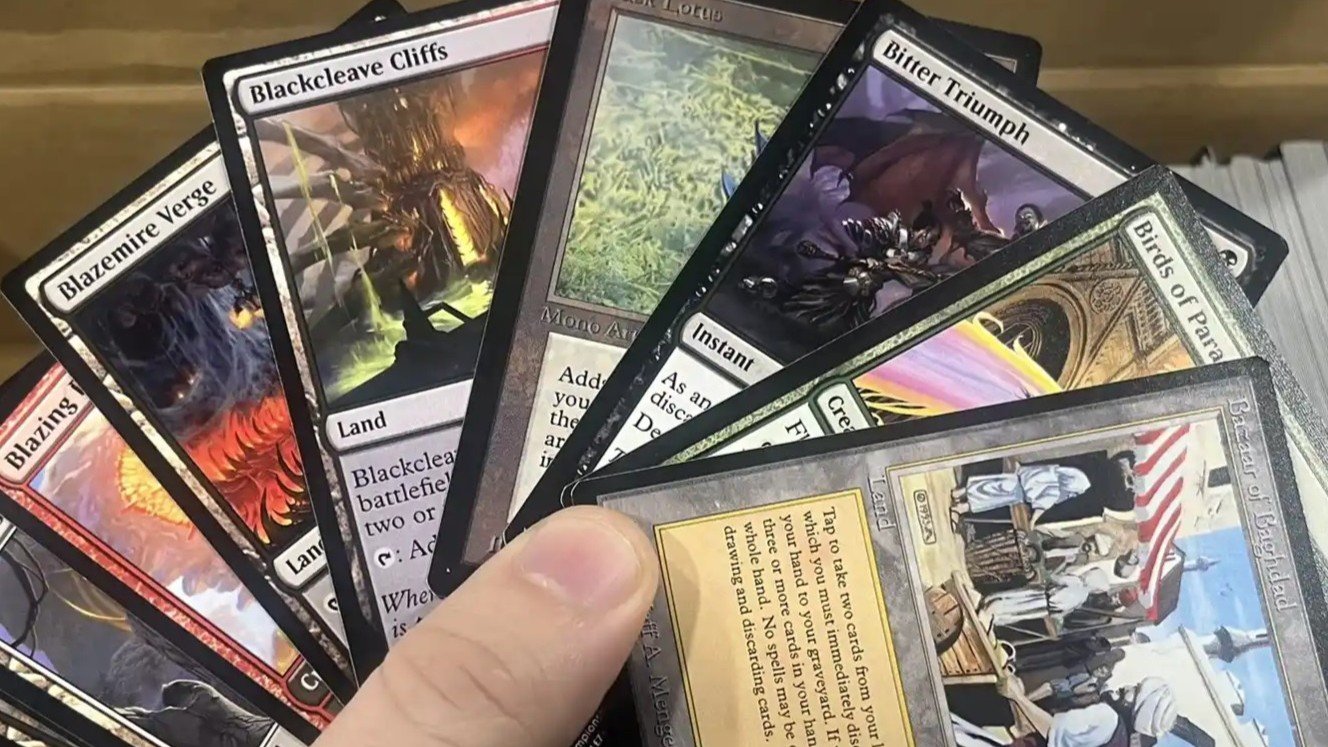
Building an MTG proxy deck gets expensive fast if you treat every half-baked idea like a finished list. That is the trap. You start with a cool commander, add forty cards you “might want,” toss in a pile of expensive lands, and suddenly you have spent money testing a version of the deck you were going to cut apart anyway.
The better approach is a lot less glamorous, which usually means it works. Pick a commander. Build the core. Fix the mana. Add the staples that actually matter. Then print the cards you are really going to test. Not every shiny card deserves a seat at the table yet.
TLDR
- Start with one commander and one clear game plan, not three subthemes jammed into the same 99.
- Build the core shell first: lands, ramp, draw, removal, and your actual win plan.
- Fix your mana base before buying flashy upgrades, because bad mana makes every deck feel worse than it is.
- Print in stages so your MTG proxy deck reflects what you are really testing, not what looked cool at 1:00 a.m.
The Cheapest Mistake Is Usually the Most Expensive One
The most common money leak in Commander is not buying one expensive card. It is buying the wrong fifty medium-expensive cards for a deck that still has no identity.
Commander gives you 100 cards, but that does not mean you should make 100 major decisions at once. You are building inside a singleton format with color identity, a commander, and a plan. If the plan is fuzzy, the spending gets fuzzy too.
I think the smartest mindset is this: do not build the final version first. Build the version that answers the next real question.
That question is usually not, “Should i print a masterpiece mana base right now?” It is more like, “Does this commander actually want tokens, sacrifice, or aristocrats?” Those are very different decks wearing similar clothes.
If you want a good example of why picking one lane matters, Nerdventure already has a strong piece on Atraxa, Praetors’ Voice deckbuilding and choosing one lane. Same idea here. A cleaner plan saves money before it saves games.
Start With One Commander and One Real Plan
Pick the commander first, obviously. But then do the part people skip: write down what the deck is actually trying to do by turns 4, 7, and 10.
That sounds a little stiff, but it works.
A useful shortcut is to finish this sentence:
“My commander deck wins by __________.”
Not “does a little bit of everything.”
Not “value.”
Not “good cards.”
Something real.
Examples:
- “This deck ramps early, sticks a dragon threat, and snowballs off attack triggers.”
- “This deck fills the graveyard, reanimates efficiently, and out-grinds removal.”
- “This deck makes tokens, converts them into mana and cards, then wins with an overrun effect.”
Once you can say that clearly, your buy list shrinks. A lot.
You stop buying random staples that are “probably good.” You start buying cards that move the deck toward one job. That is the difference between a testing list and a cardboard junk drawer.
Build the Core Before You Touch Staples
This is the part that saves the most money, because it forces you to earn your upgrades.
Before you proxy splashy finishers, build the shell:
- mana base
- ramp
- card draw
- spot removal
- board wipes
- protection
- payoff cards
- win conditions
A lot of Commander players use rough baselines here, then adjust for curve, colors, and power level. I usually start with something close to this:
- 37 to 39 lands
- 8 to 12 ramp pieces
- 8 to 10 card draw effects
- 8 to 10 interaction pieces
- a focused core of synergy cards
- a small group of actual finishers
Not every deck wants the same counts. Low-curve decks can cheat down a little. Greedy battlecruiser lists usually need more mana than people want to admit. And yes, everyone thinks their curve is lower than it is. It usually is not.
Here is the key point: if your shell is not functional, you are not testing the fun cards. You are testing whether your deck can operate at all.
That means the first version of your list should include boring but honest placeholders. Use basic lands. Use cheap stand-ins for effects you are not sure about. Goldfish the deck. Play a few games. See what actually underperforms.
Then spend.
Fix the Mana Base Before the Fancy Cards
This is where a lot of wasted money hides. People hate spending on lands because lands feel unexciting. But a bad mana base makes every card in your deck feel worse.
If your commander is two colors, you can usually get to a playable place pretty cheaply. If your commander is three or more colors, your mana base becomes one of the first things worth proxying because it affects every opening hand, every mulligan, and every awkward turn where you stare at the right spell and the wrong lands.
For most decks, i would fix mana in this order:
- Land count
- Color fixing
- Untapped access when possible
- Utility lands after the basics are stable
That means you do not start with cute colorless lands unless the deck truly needs them. And you do not jam every tapland you own just because they technically make colors. Reliable mana first. Style points later.
A lot of multicolor Commander decks get immediate value from the same mana pieces over and over. That is why mana is such a good proxy target. A strong mana base does not just improve one deck. It improves your next deck too.
Add Reusable Staples Last, Not First
Staples are great. Staples are also how people slowly spend a pile of money on cards they did not need yet.
The smart question is not, “What are the best staples?” It is, “Which staples will i reuse across multiple decks, and which ones only make sense after the core is working?”
Good proxy targets usually fall into one of these buckets:
- premium lands you will reuse constantly
- flexible ramp pieces
- universal card draw
- efficient removal
- a few high-impact finishers you genuinely want to test
Bad early buys usually look like this:
- narrow synergy cards before you know the theme is staying
- luxury upgrades to a bad mana base
- expensive haymakers in a deck that still stumbles on turn three
- pet cards you know are questionable but keep defending like a lawyer
I am not saying never print pet cards. Magic would be a lot duller if we all acted like spreadsheets. I am saying earn them after the deck works.
Print Your MTG Proxy Deck in Stages
This is the part that matters most if you want an MTG proxy deck without wasting money.
Do not print the full 100 on your first pass unless you already know the list is locked.
Instead, print in stages.
Stage 1: Print the Cards That Answer Real Questions
Start with the expensive or hard-to-test cards that actually change how the deck feels.
That usually means:
- your commander, if needed
- premium lands
- expensive staples
- major payoff pieces
- combo or synergy cards you are unsure about
That might be 20 to 35 cards, not 100.
Why? Because those are the cards you are actually deciding on. The rest can be basics, placeholders, or cheap substitutes while you test the shell.
Stage 2: Play Enough Games to Learn Something
You do not need fifty games. But you do need more than one magical Christmasland opener where everything worked.
Ask simple questions:
- Was i missing colors?
- Did i flood out?
- Did i run out of cards?
- Was my commander essential or just nice to have?
- Which cards sat in hand doing nothing?
- Which effects kept overperforming?
This is also where you notice whether your deck has too many “good cards” and not enough glue.
Stage 3: Upgrade the Repeats
Once you know the plan works, then you print the cards you keep re-adding to new lists.
That is where proxying really saves money. You are no longer guessing. You are building a reusable pool of lands, staples, and power cards that move from deck to deck.
And if your main pain point is getting from decklist to physical cards without turning it into a file-prep side quest, Nerdventure’s ProxyMTG review is worth reading. The big idea is simple: less setup friction means less wasted effort on lists you are still tuning.
A Simple Spending Order That Usually Works
Here is the version i would hand to a friend who wants results and not a lecture.
| Step | What To Lock In First | What To Delay |
|---|---|---|
| 1 | Commander and one clear game plan | Side themes and cute inclusions |
| 2 | Land count, color fixing, ramp, draw, removal | Luxury finishers |
| 3 | Core synergy pieces | Narrow tech cards |
| 4 | Reusable staples and premium lands | Cards you are “pretty sure” you want |
| 5 | Full print run | Anything still getting cut every week |
That order is not flashy. It is also how you avoid printing a whole deck just to decide later that the commander should have been someone else entirely. Which, to be fair, is a very Commander thing to do.
Build for Testing, Then Build for Pride
There are really two versions of every deck.
The first version is the test deck. It exists to answer questions cheaply.
The second version is the finished deck. It exists because you now know what deserves the slot.
People get in trouble when they skip straight to the pride version.
So if you want to build an MTG proxy deck the smart way, keep the process boring at first. Pick the commander. Build the shell. Fix the mana. Add the cards that will matter in multiple decks. Then print the stuff you are genuinely testing.
That is how you spend less, tune faster, and end up with decks that actually survive contact with a real playgroup.
FAQs
How Many Cards Should I Proxy First For a Commander Deck?
Usually not all 100. I think 20 to 35 cards is a smart first wave if the list is still in testing. Start with the expensive lands, staples, and payoff cards that answer real deckbuilding questions.
Should I Proxy Lands Before Spells?
In many multicolor decks, yes. Lands affect every game. A flashy six-drop only matters when you draw it. A better mana base helps your whole deck function.
What Cards Are the Safest Proxy Purchases?
Reusable staples, premium fixing lands, flexible ramp, efficient draw, and removal. Cards that move between decks give you the best value over time.
Is It Better To Proxy a Full Deck or a Staple Pool?
For most players, a staple pool is smarter long term. It lets you test multiple commanders and move the same high-value cards around instead of rebuying the same effects in different shells.