
TLDR
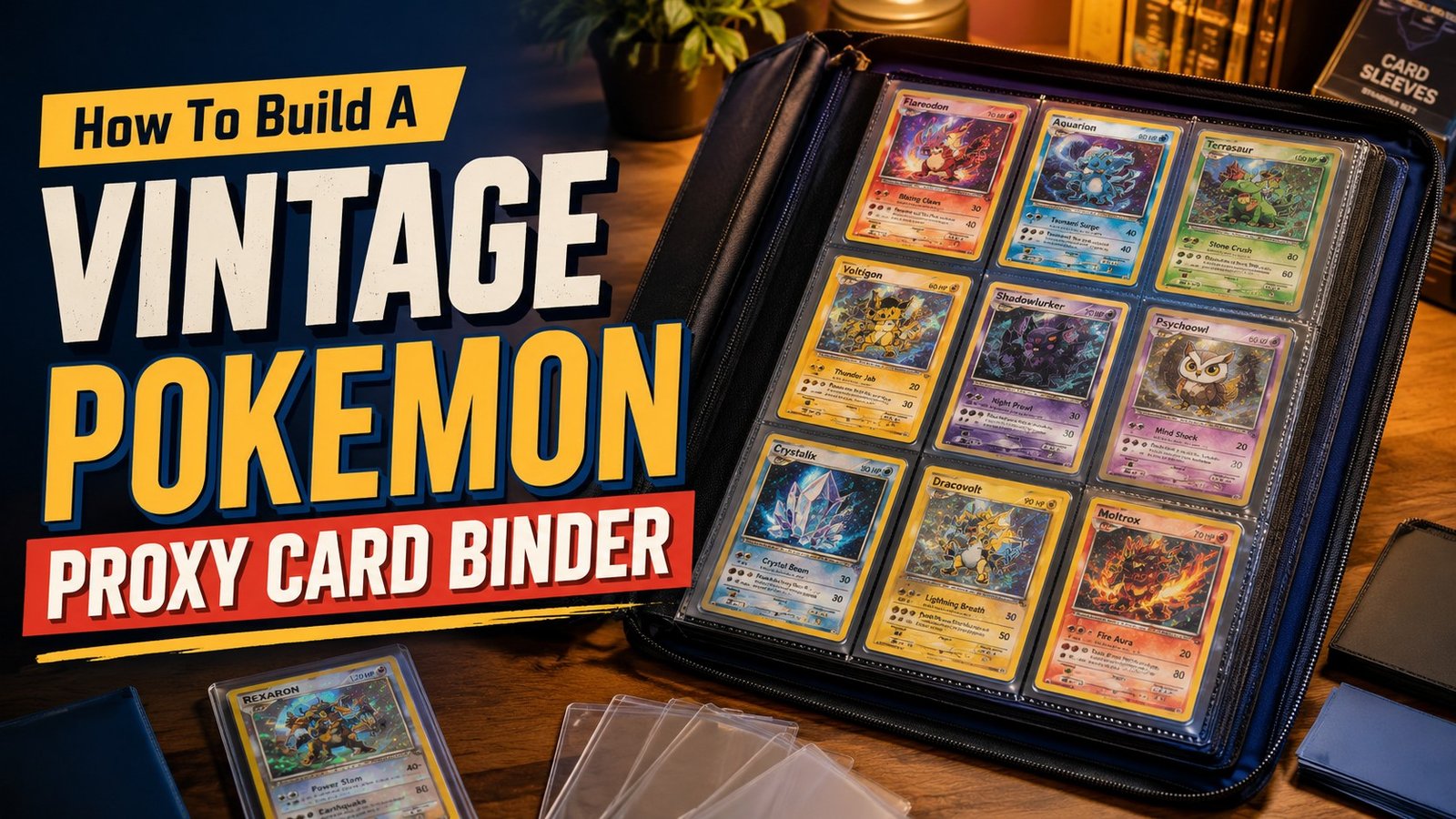
A vintage Pokemon proxy card binder is a good way to enjoy classic cards without chasing every expensive original. Build it around a clear theme, use honest labeling, keep proxies separate from real cards, and choose cards that make the binder feel complete. Proxies are for casual collecting, display, and personal enjoyment. They are not official cards and should not be used in sanctioned events or sold as authentic cards.
A half-finished vintage binder has a very specific kind of sadness to it. You flip through the pages, see the Base Set starters, maybe a Fossil Gengar, maybe a Team Rocket Dark Charizard, and then there it is: an empty slot where the card you actually wanted should be.
That is where a vintage Pokemon proxy card binder makes sense. Not as a fake investment. Not as a way to fool anyone. Just as a clean, organized, good-looking way to enjoy old-school Pokemon cards without spending the kind of money that makes you close the tab and rethink your hobbies.
A vintage Pokemon proxy card binder is especially useful if you love classic holo cards, Gold Stars, shadowless cards, early promos, or cards you remember seeing as a kid but never actually owned. The goal is simple: build a binder that feels satisfying to look through, stays honest about what is real and what is proxy, and gives you a personal collection you can enjoy without stressing over every missing chase card.
What Is A Vintage Pokemon Proxy Card Binder?
A vintage Pokemon proxy card binder is a card binder built around proxy versions of older, rare, nostalgic, or hard-to-find Pokemon cards. These might include Base Set holos, Jungle and Fossil favorites, Team Rocket cards, Neo-era cards, Gold Stars, Crystal cards, or older promotional cards.
The key word is proxy. These are not official Pokemon cards. They should not be treated like official cards, graded like official cards, sold like official cards, or slipped into a trade binder without clear disclosure.
Used correctly, proxies are closer to display pieces or casual placeholders. They let you fill a binder page, study the art, build a nostalgic set, or enjoy a card design that would otherwise be locked behind a high price.
That distinction matters. A good proxy binder should feel clear and intentional, not shady. The best version says, “I love these cards and wanted a way to display them,” not “I hope someone mistakes this for the real thing.”
Why Build A Binder With Vintage Pokemon Proxy Cards?
The main reason is cost, but that is not the only reason.
Vintage Pokemon cards can be expensive, especially when you get into shadowless cards, first edition holos, Gold Stars, Crystal cards, and clean copies of popular Pokemon like Charizard, Blastoise, Venusaur, Lugia, Mewtwo, Rayquaza, Gengar, and Pikachu. A proxy binder lets you enjoy the visual side of collecting without turning every empty slot into a financial decision.
There is also less handling anxiety. If you own a real vintage card, you may not want to pull it out often. You may keep it in a graded slab, top loader, or separate protected storage. A proxy can sit in the binder where the card belongs visually, while the real copy stays protected somewhere else.
That setup works well for collectors who want the binder experience without risking their better cards. You still get the page layout. You still get the nostalgia. But you do not have to shuffle valuable originals in and out of binder pockets.
Proxies also help with personal theme binders. You can build around:
- Favorite childhood cards
- Kanto holos
- Charizard, Blastoise, and Venusaur pages
- Legendary birds
- Gold Star cards
- Team Rocket cards
- Neo Genesis through Neo Destiny
- E-reader era cards
- Cards you always wanted but never pulled
That last category is usually the most honest one. Most collectors have a few cards they have wanted for years. A proxy binder gives those cards a place in the collection without pretending the chase is over.
Choose A Theme Before You Buy Cards
The easiest mistake is buying random cool proxies and then trying to organize them later. That can work for a small stack, but it usually turns into a binder full of nice cards that do not quite belong together.
Start with a theme.
A set-based binder is the most traditional. You might build a Base Set holo page, then Jungle, then Fossil, then Team Rocket. This creates a clean timeline and gives the binder a natural flow.
A Pokemon-based binder is better if you collect specific characters. For example, a Charizard page could include Base Set, Base Set 2, Dark Charizard, Blaine’s Charizard, Gold Star Charizard, Delta Species Charizard, and modern tribute cards. A Blastoise page can do the same. So can Pikachu, Mewtwo, Lugia, Gengar, Rayquaza, or Eeveelutions.
A rarity-based binder is best if you like trophy-style collecting. Put the heavy hitters together: shadowless holos, Gold Stars, Crystal cards, shining cards, vintage promos, and other cards that feel special on sight.
A nostalgia binder is looser. This is the binder where the rule is, “I remember this card and I like it.” That might not sound formal, but it often makes the most enjoyable binder. Not every collection needs to impress another collector. Some just need to make you happy when you flip through them.
If you want a simple starting point, browse the PokemonProxy shop and pick 9 to 18 cards that fit one clear idea. One page is enough to start. You can always expand later.
Plan Your Binder Layout Around Pages, Not Singles
Most collectors use 9-pocket pages, so think in groups of 9.
A single strong page often looks better than three scattered pages. For example, a Kanto starter page can use three Charizard cards, three Blastoise cards, and three Venusaur cards. A legendary bird page can use Articuno, Zapdos, and Moltres versions. A Gold Star page can focus on cards like Rayquaza, Charizard, Mew, Mewtwo, and Entei.
The goal is visual rhythm. Put the biggest card in the middle when possible. Use matching eras together. Keep holo cards grouped if the finish is part of the appeal.
Here are a few easy binder page ideas:
- Base Set big three: Charizard, Blastoise, Venusaur, plus related evolutions
- Team Rocket page: Dark Charizard, Dark Blastoise, Dark Raichu, Dark Gyarados
- Fossil favorites: Gengar, Dragonite, Articuno, Zapdos, Moltres, Lapras
- Gold Star page: Rayquaza, Charizard, Mew, Mewtwo, Entei, Celebi
- Childhood chase page: the 9 cards you always wanted most
- Villain page: darker art, Team Rocket cards, ghost types, and powerful legendaries
This is one place where proxies are especially useful. Real vintage collections often grow unevenly because price controls what you can add. A proxy binder can be planned from the page level, which makes the final result cleaner.
Keep Proxies Separate From Real Cards
This is not the most glamorous advice, but it is important.
Keep your vintage Pokemon proxy card binder separate from your real card collection. You can use a different binder color, a different label, or a first-page note that says the binder contains proxies. You do not need to make it ugly. You just need to make it clear.
A simple first-page label works:
“This binder contains proxy cards for personal display and casual collecting. These are not official Pokemon cards.”
That one sentence prevents confusion. It also keeps the collection honest if someone else flips through it.
You can also label the back of each sleeve row with small removable notes. Some collectors prefer not to mark the proxy itself, especially if the card is mainly for display, but the binder should still make the status clear somewhere.
The rule is simple: no surprises. A proxy should never enter a trade, sale, or official event as if it were real.
Use Proxies As Placeholders For Expensive Originals
One of the best uses for a proxy binder is placeholder collecting.
Let’s say you own a real Gold Star Rayquaza, but it is graded or stored separately. Instead of leaving a blank slot in your binder, you can use a proxy as a visual placeholder. The binder stays complete, and the original stays protected.
The same idea works if you are slowly building toward real copies. You can put proxies in the binder first, then replace them over time if you decide to buy originals. That gives you a working collection instead of a row of empty spaces.
It also helps you avoid impulse buys. When a binder has blank slots, it is easy to overpay just to “finish the page.” A proxy lowers that pressure. You can wait for the right real copy, the right condition, and the right price.
For collectors who like Gold Stars, a focused product like the Gold Star Delta Species 5x proxy set can make a clean centerpiece page without requiring you to chase every original at once.
Choose Holo Or Non-Holo Based On The Binder Goal
Holo proxies usually look better in a display binder, especially if you are recreating the feel of vintage chase cards. The shine is part of the memory. A non-holo Charizard might still look cool, but a holo Charizard feels closer to the card people remember wanting.
That said, non-holo proxies have their place. They can work well for custom art cards, casual deck placeholders, or binder sections where you want a cleaner, less flashy look.
For a vintage display binder, I would usually choose holo for:
- Base Set holos
- Jungle and Fossil holos
- Team Rocket holos
- Gold Stars
- Crystal cards
- Shining cards
- Legendary Pokemon
- Big nostalgia cards
Use non-holo cards when the art matters more than the finish, or when you are building a simple casual binder instead of a showpiece.
Check Card Names, Sets, And Artwork Before Ordering
Before adding a proxy to your binder plan, confirm exactly which version you want.
This matters because Pokemon cards often have many versions. Charizard alone can mean Base Set, shadowless, first edition, Base Set 2, Legendary Collection, Blaine’s Charizard, Dark Charizard, Gold Star, Delta Species, VMAX, ex, or modern alternate art versions.
Those are very different binder choices.
Use the official Pokemon TCG card database or another reliable card database to check card names, expansions, rarity, illustrator, and format details. You do not need to become a spreadsheet person unless that is your thing. Just make sure the card you order matches the slot you planned.
A good binder plan usually includes:
- Card name
- Set or era
- Holo or non-holo
- Page number
- Slot position
- Notes on whether you own the real copy
That sounds fussy, but it saves time later. Nothing is more annoying than ordering a card and realizing it belongs to a different era than the page you built.
Do Not Use Proxy Cards In Official Events
This needs to be clear: proxy cards are not legal in official Pokemon TCG events.
For official play, bring genuine Pokemon TCG cards. Proxies are for casual play, testing, collecting, display, and personal use when everyone involved understands what they are.
Even if a proxy has the correct size, looks clean, and feels good in a sleeve, that does not make it official. Quality changes the display experience. It does not change tournament legality.
This also applies to binder behavior. If you bring a proxy binder to a card shop, label it clearly. Do not mix it with a trade binder full of real cards. Do not let someone assume the cards are authentic. That is how a harmless display collection starts feeling questionable.
A vintage Pokemon proxy card binder is at its best when it is honest from the first page.
Avoid Counterfeit Confusion
A proxy and a counterfeit can look similar from a distance, but the intent is different.
A proxy is disclosed. A counterfeit is meant to deceive.
That is the line you should never cross. Do not sell proxies as real. Do not trade them as real. Do not use vague wording like “custom vintage card” if someone might reasonably think they are buying an official card. Be direct.
If you ever sell a binder that includes proxies, say so clearly in the title, description, and conversation. Better yet, remove the proxies and sell them separately as proxies.
Collectors care about trust. Once a card changes hands, clear labeling protects everyone.
A Simple Vintage Proxy Binder Build
Here is a practical starter build for a 36-card vintage Pokemon proxy card binder.
Page 1: Base Set favorites
Charizard, Blastoise, Venusaur, Alakazam, Chansey, Gyarados, Mewtwo, Nidoking, Raichu.
Page 2: Jungle and Fossil
Scyther, Snorlax, Vaporeon, Jolteon, Flareon, Gengar, Dragonite, Articuno, Lapras.
Page 3: Team Rocket
Dark Charizard, Dark Blastoise, Dark Raichu, Dark Gyarados, Dark Dragonite, Dark Alakazam, Dark Machamp, Dark Slowbro, Rocket’s Zapdos.
Page 4: Gold Star and special cards
Rayquaza Gold Star, Charizard Gold Star, Mew Gold Star, Mewtwo Gold Star, Entei Gold Star, Celebi Gold Star, Crystal Lugia, Shining Charizard, Birthday Pikachu.
That is enough to feel like a real binder project without becoming overwhelming. It also gives you a mix of starter nostalgia, classic set identity, villain-era style, and high-end chase-card energy.
From there, expand by era. Add Neo. Add e-reader cards. Add promos. Add Japanese favorites. Or stop at 36 cards and enjoy a clean little binder. Bigger is not always better.
Common Mistakes To Avoid
The biggest mistake is mixing proxies and real cards without a clear system. Keep them separate or label them clearly.
Another mistake is buying too many cards before choosing a theme. A good binder has structure. It does not have to be rigid, but it should feel like someone made choices.
Do not overfill pockets. Do not jam multiple cards into one slot. Use sleeves that fit cleanly, and avoid forcing thick cards into pages that are too tight.
Do not treat proxies like investments. They are not. Buy them because you like the card, the art, the nostalgia, or the finished binder page.
And do not build the binder for someone else’s approval. The best vintage proxy binder is the one you actually want to open.
FAQs
Are vintage Pokemon proxy cards real Pokemon cards?
No. Vintage Pokemon proxy cards are not official Pokemon cards. They are custom-made stand-ins for personal display, casual collecting, or testing. They should always be disclosed as proxies.
Can I use a vintage Pokemon proxy card binder as a trade binder?
You should not use it as a normal trade binder. If you show it to people, make it clear that the binder contains proxies. Do not trade or sell proxy cards as authentic cards.
What cards should I put in a vintage Pokemon proxy card binder first?
Start with cards that create a strong first page. Base Set starters, Jungle and Fossil holos, Team Rocket cards, Gold Stars, and personal childhood favorites are all good choices.
Should I organize proxy cards by set or by Pokemon?
Both work. Organize by set if you want a historical collection. Organize by Pokemon if you collect characters like Charizard, Blastoise, Pikachu, Gengar, Lugia, or Rayquaza.
Are proxy cards legal in official Pokemon tournaments?
No. Player-made proxy cards are not legal in official Pokemon TCG events. Use genuine Pokemon TCG cards for sanctioned play.
Should I mark my proxy cards?
You do not have to write on the card itself, but the binder should clearly identify them as proxies. A first-page note or binder label is usually enough for a display collection.
Conclusion
A vintage Pokemon proxy card binder is not about pretending you own every expensive card. It is about building a collection that is fun to look through, easy to understand, and honest about what it is.
Pick a theme. Plan pages in groups of 9. Keep proxies separate from real cards. Label the binder clearly. Use proxies as display pieces, placeholders, or casual collecting cards, not as official cards or trade bait.
Done well, the binder scratches the exact itch that made Pokemon collecting fun in the first place. You get the art, the nostalgia, the big holo moments, and the satisfaction of a finished page. And you do it without turning every slot into a financial debate.