
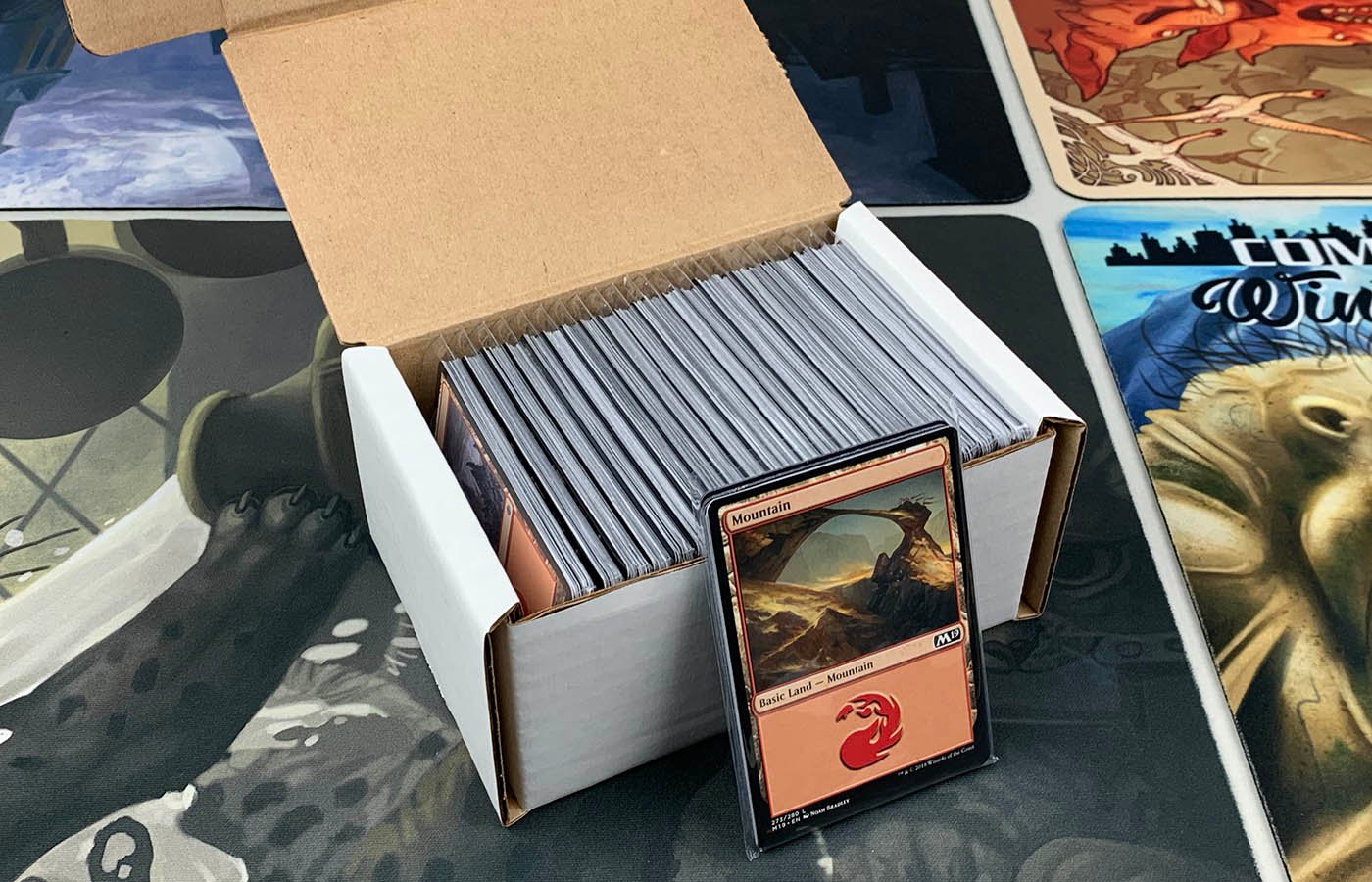
Cube is one of those Magic things that sounds fancy until you actually do it once. Then it becomes, “Wait, I can draft the exact kind of Magic I like… whenever I want?” If you’re searching how to build a cube with proxies, you’re probably in the same spot I was: excited about the idea, not excited about dropping a mortgage payment on cardboard.
Proxies fix that. They let you build the environment you want, test it, tune it, and keep it playable for your group without turning cube night into a financial arms race. The trick is doing it in a way that still feels smooth to draft and play. Budgeting, themes, consistent printing, and keeping the experience clean are the whole game.
Start with the cube size (because it affects everything)
Before you pick a single card, decide how many people you’re building for most often. This isn’t about “bigger is better.” Bigger just means more variance and more work.
A few common starting points:
- 360 cards: the classic “8 players, draft 3 packs of 15, everything gets seen” size. It’s tight and easier to balance.
- 450 or 540: more variance, more space for pet cards, and more drafts that feel different. Also more chances for an archetype to show up half-built.
If you don’t have a regular eight-person pod, don’t stress. Plenty of groups draft with 4–6 players, do Winston drafts, grid drafts, or whatever keeps the night moving. Just pick a size that matches your reality, not your dream group chat.
A proxy cube also makes resizing less painful. You can start at 360, draft it a few times, and expand later without feeling like you “wasted” money.
Budgeting for a cube with proxies (the costs people forget)
Proxies make the card pool affordable. They don’t make the whole cube free.
Here’s what tends to sneak up on people:
Sleeves. You will want everything sleeved the same way. If you mix and match, you risk “marked” cards, and nothing kills a draft vibe faster than someone noticing they can feel the difference.
Storage. A decent box, dividers, a land station, maybe tokens. It adds up, but it’s also what makes setup fast and cleanup painless.
Basic lands and fixing. Even if your cube is all proxies, you still need enough basics for multiple drafters in the same color. And if you want the gameplay to feel fair, you’ll also want a real plan for mana fixing (dual lands, fetches, or budget alternatives, depending on your theme).
My budgeting advice is boring but effective: spend money on the parts that make the cube night run smoothly (sleeves, organization), and use proxies to keep the card pool flexible. That way you can iterate without feeling guilty every time you cut a card you “paid for.”
Pick a theme and power level your group will actually enjoy
Theme is where cube becomes personal. It’s also where cube becomes messy if you try to do everything at once.
A few theme directions that play well with proxies:
- “Best of” high power (sometimes called powered or Vintage-style): fast mana, broken plays, huge swings.
- Peasant or Pauper: tighter gameplay, fewer blowouts, and usually easier balancing.
- Set cube / block cube / plane cube: you’re recreating a specific draft feel (or your own remix of it).
- Synergy cube: you’re pushing specific archetypes hard (reanimator, artifacts, spells, sacrifice, tokens, and so on).
Whatever you pick, also pick a power level and stick to it. The most common early cube problem is mixing cards that belong in totally different worlds. You’ll get games where one player curves out like it’s a normal Limited deck, and the other player does something that feels like a combo highlight reel. Some groups love that. A lot don’t.
A simple way to keep yourself honest: when you add a card, ask “Is this here because it’s strong, or because it helps a deck?” If the answer is “It’s strong and it doesn’t help anything,” you’re probably drifting toward “good stuff cube,” whether you meant to or not.
Build archetypes first, then fill in the “glue”
When people say cube design is hard, they usually mean this part.
A good cube draft has lanes. Players should be able to read signals, commit, pivot, and end up with a deck that feels like it has a plan. That doesn’t happen by accident.
What works for most cubes is building around the ten two-color pairs and giving each one at least a light identity. It doesn’t need to be rigid. In fact, overlap is healthy. But drafters should see enough signposts that they can say, “Oh, this environment supports spells,” or “Okay, sacrifice is real.”
Then you add the glue:
- Removal (so games don’t stall into board clutter forever)
- Card advantage (so control decks can exist)
- Fixing lands (so people can cast their cards)
- Curve support (so aggro isn’t a joke and midrange isn’t just a pile)
This is also where proxies shine. You can draft, notice that blue decks always feel short on win conditions, and fix it immediately. You can realize your mana is too greedy, add more fixing, and see how it changes the draft. That kind of tuning is the fun part, as long as you keep notes.
Consistent printing is what makes proxies feel “real” in play
This is the part nobody wants to think about, until they shuffle up and something feels off.
A clean proxy cube is consistent in three ways:
1) Readability.
Your proxies should be easy to identify across the table. If you use wild alternate art, make sure the name, mana cost, and rules text are clear. Cube already asks players to process a lot of information fast. Don’t add extra friction unless your group genuinely loves it.
2) Physical uniformity.
Same cut, same thickness, same finish, same sleeve type. If some cards are thinner, glossier, or cut differently, they can become “marked” without anyone trying to cheat.
3) Visual cohesion.
This one is optional, but it helps. If half the cube is crisp modern frames and the other half looks like it came from a blurry screenshot folder from 2011, the draft will still work, but it won’t feel great.
If you want to print the whole cube through one pipeline, PrintMTG is a solid option because you’re not juggling five file formats and a printer that hates you on principle. You can keep the whole cube consistent, order replacements easily, and update sections without redoing everything.
Two PrintMTG reads that pair well with cube building:
And yes, this is a real part of how to build a cube with proxies that most people skip: do a small test batch first. Draft it. Shuffle it a lot. See how it feels sleeved. Then scale up.
Keeping the experience clean (the “nobody talks about it” section)
A cube can be strong, thematic, and beautifully printed, and still be annoying to play if the logistics are sloppy.
Here’s what “clean” looks like in practice:
Clear rules up front.
Tell people what they’re drafting. Power level, intended archetypes, any house rules, and how you handle proxies. Cube night goes smoother when nobody is surprised.
A land station that doesn’t suck.
Sort basics by color. Have enough. If you run snow basics or weird utility lands, label it so people don’t have to ask every five minutes.
Tokens and reminders.
If your cube supports themes that generate tokens, counters, or emblems, put the basics in the box. You don’t need every token ever printed, but you do need enough that the board state stays readable.
One sleeve plan.
If you do nothing else, do this. The easiest way to avoid marked cards is to keep everything sleeved the same, ideally with sleeves that aren’t see-through on the back.
Keep proxies obviously proxies.
Cube is usually casual, but you still want to avoid any confusion with real cards, especially if you play at stores or travel with your cube. Good proxy etiquette is simple: don’t misrepresent, don’t trade them like real cards, and don’t bring them into sanctioned play.
If you nail those basics, the cube feels “real” at the table. And the whole point is the table.
Updating the cube without driving yourself nuts
Your first list will not be your final list. That’s normal.
A simple update rhythm that works:
- Draft a few times.
- Ask one or two questions after each draft: “What felt unsupported?” “What felt unbeatable?” “What never got played?”
- Change a small number of cards at a time.
- Draft again.
If you change 40 cards at once, you won’t know what fixed the problem (or caused the new one). Small edits keep your learning curve sane.
And yes, you will end up with a little “maybe board” of cards you love that don’t belong. Welcome to cube.
Final thoughts
If you take one thing from this, let it be this: you don’t need a perfect list to start. Start with a size you can manage, pick a theme your group will enjoy, and print in a consistent way so the cards shuffle and play cleanly.
Then draft it. Tune it. Make it yours.
That’s the real answer to how to build a cube with proxies. You build it, you play it, and you keep the parts that make everyone say, “Same time next week?”