
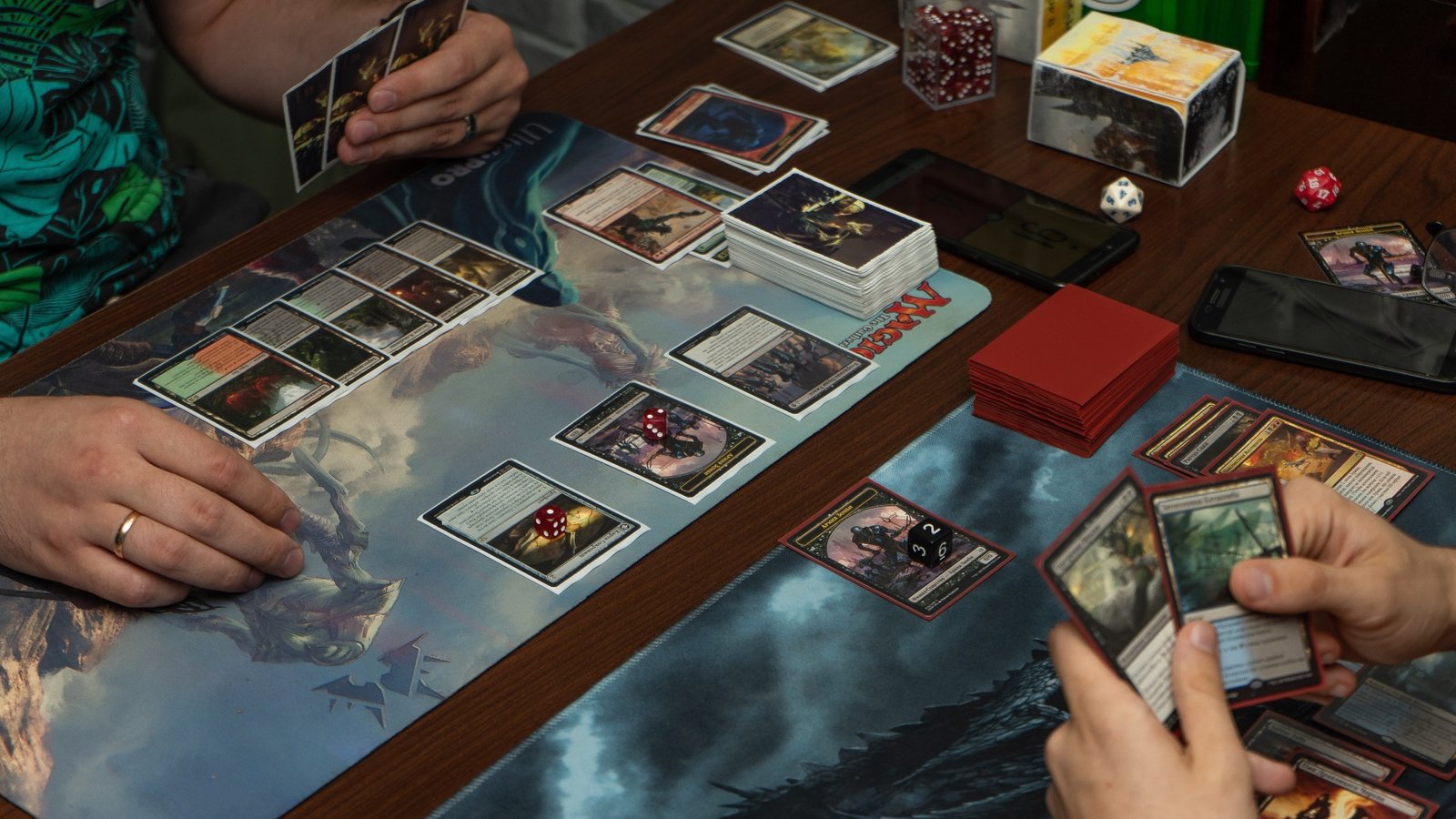
This post helps first-time cube builders build their first MTG cube by using a simple starter template and a few non-negotiable design rules, so they can draft a fun, balanced environment without endless tweaking.
TLDR
- Start with 360 cards if you want the cleanest “draft this weekend” experience.
- Build from a starter skeleton (card counts by color/type) and resist “just one more archetype” for version 1.
- Make games feel fair with real mana fixing and enough early interaction.
- Pick simple, obvious archetypes with overlap (so drafters can pivot instead of trainwreck).
- If you’re printing your cube, prioritize readability + consistent cuts + sleeves-first for smooth shuffles.
Cube is the most “make it yours” way to play Magic, which is exactly why building your first MTG cube can feel like you have 40 tabs open and none of them agree. The trick is to treat your first cube like a product launch: ship v1, play it, then patch it.
You are not building the perfect cube. You are building a cube that drafts cleanly, plays fun games, and gives you real feedback after one night.
Step 1: Pick your cube’s vibe in one sentence
Before you pick a single card, write a one-liner like:
- “Mid-power, creature-forward, two-color decks, light synergy.”
- “High-power, fast mana, broken combos, big swings.”
- “Beginner-friendly, evergreen mechanics, no complicated board states.”
That sentence is your guardrail. If a card (or archetype) does not serve it, it goes in the “maybe later” pile.
A quick rule that saves a lot of pain: your first cube should be slightly simpler than your personal taste. Complexity creeps in naturally once you start iterating.
Step 2: Choose a size that matches reality
For building your first MTG cube, 360 cards is the sweet spot. Why?
- It supports the classic draft experience cleanly.
- It’s easier to balance.
- Archetypes stay dense enough to show up.
The math that keeps you honest: 8 players x 3 packs x 15 cards = 360 cards drafted. A 360-card cube means the whole list hits the table in a full 8-person draft, so your tuning actually matters every session.
If your group is usually 4–6 players, 360 still works. You just see a smaller slice each night, which is fine for learning what’s working.
Step 3: Use a starter skeleton (then build inside it)
This is the part that makes cube building stop feeling like chaos. Start with a simple “skeleton” that gives you balanced lanes, then fill it with your favorite cards.
Here’s a clean 360-card starter skeleton that drafts well for most first cubes:
| Section | Count | Notes |
|---|---|---|
| White | 50 | Creatures + interaction + a couple build-arounds |
| Blue | 50 | Card selection, tempo, counterspells, value |
| Black | 50 | Removal, discard, graveyard value |
| Red | 50 | Aggro, burn, pressure, a little combo support |
| Green | 50 | Ramp, beef, fixing support, midrange glue |
| Multicolor (gold) | 30 | ~3 per guild, keep them flexible |
| Colorless (artifacts) | 40 | Mana rocks, equipment, role-players |
| Lands | 40 | Fixing + utility lands |
Inside each mono-color section, a good first pass is:
- roughly 60% creatures
- roughly 40% noncreatures (removal, draw, combat tricks, planeswalkers, etc.)
You can absolutely break this later. Version 1 is about giving drafters enough playables and enough interaction to avoid non-games.
Step 4: Make mana fixing a feature, not an afterthought
Most “my cube felt swingy” problems are secretly mana problems. If players stumble, they do not get to show off the cool archetypes you built.
For a first 360, a strong baseline is:
- 30–36 fixing lands (dual land cycles, fetchable lands, rainbow lands)
- plus a handful of utility lands and/or mana rocks
If you want a simple mental model: your cube should let players reasonably draft two colors consistently, and splash a third when they pay a real cost (picks, life, tempo).
Also, gold cards get better when fixing is good. If your fixing is weak and your gold section is big, drafts turn into “I took a sweet card and never cast it.”
Step 5: Choose archetypes that signal clearly and overlap naturally
You do not need ten intricate synergy decks to make cube fun. For building your first MTG cube, you want archetypes that:
- Show up early (so drafters can see the lane)
- Have redundant pieces (so they do not whiff)
- Share cards with neighboring strategies (so pivots are possible)
A good first-cube approach is “two-color lanes” with obvious identities, like:
- UW tempo or flyers
- RB sacrifice
- UG ramp
- GW +1/+1 counters
- UR spells
The secret sauce is overlap. If your UR spells deck and your UW tempo deck both want cheap cantrips and interaction, drafts feel smoother and less trap-y.
Step 6: Plan the draft night like you’re hosting a game, not a spreadsheet
A cube lives or dies on the night-of experience. Here’s a simple checklist you can actually use:
- Sleeves: Same sleeves for the whole cube so shuffling stays consistent.
- Basics station: A box of basics (and any house rules for how many).
- Tokens and counters: The ones your cube actually creates, not every token ever printed.
- Pack plan: For 8 players, make 24 packs of 15. For fewer players, decide whether you’re doing fewer packs, smaller packs, or a different draft format.
- Timeboxes: Draft (25–35 min), build (20–30 min), rounds (45–60 min each).
If you want the easiest first night, do the “normal” thing: booster-style draft, build 40-card decks, play best-of-3 matches, call it a win.
Printing your cube (if you’re going that route)
If you’re printing cube cards as play pieces, focus on what changes gameplay:
- Readability: crisp text and symbols so the table can parse board states quickly.
- Consistency: consistent sizing and cuts so the cube shuffles smoothly.
- Durability: a finish that holds up to repeated drafts.
- Sleeves-first: most cubes live in sleeves, so optimize for shuffle feel and handling.
That’s the difference between “cool list” and “we want to draft this every week.”
Common first-cube mistakes (and quick fixes)
Too many narrow gold cards: If drafters cannot cast them, they become dead picks. Shrink gold, increase fixing, or pick gold cards that still play like mono-color cards.
Not enough cheap interaction: Games get snowbally fast. Add more one- and two-mana removal, counters, and defensive plays.
The curve starts at three: Aggro disappears, and everyone durdles. Add more one- and two-drops across all colors, not just red and white.
Archetypes with no overlap: If a lane is “all-in” and the pieces do not work elsewhere, trainwrecks happen. Add glue cards that multiple decks want.
FAQs
What’s the best cube size for beginners?
360 is the cleanest start. It’s easier to balance, supports classic drafts, and keeps archetypes dense.
How many lands should a 360 cube run?
A common starting range is 35–45 lands, with 30–36 of those being fixing lands, depending on how splashy you want decks to be.
Do I need to include every color pair?
No. For a first cube, it’s totally fine to emphasize what your group enjoys. Just make sure the supported lanes have enough density and overlap.
How do I know what to cut after my first draft?
Track three things: cards that never make main decks, cards that always wheel, and cards that create unfun games. Cut those first, then adjust fixing and curve.
Should my first cube include complicated combo decks?
Only if your group loves that. Otherwise, start with cleaner archetypes and add combo packages once your baseline environment is stable.